CESURLAR SARF / GUIDES
When should plasma consumables be inspected?
There is no single replacement interval for every plasma cutting operation. Monitor operating conditions and component condition together. A useful record helps identify changes in cut quality and makes it easier to reorder the correct part.
Record the cutting conditions first
Keep material, thickness, programme, consumable codes and inspection date together. Add pierce count or arc time when available from the system. Directly comparing component life across different jobs may be misleading. Consistent records make it easier to identify when a change began and what else changed at the same time.
Do not attribute every change to the nozzle
When cut quality changes, check consumable condition, component compatibility and machine settings together. Increased dross or interrupted cutting does not identify a single faulty component. Follow the system maintenance instructions and refer unexplained changes to the maintenance team.
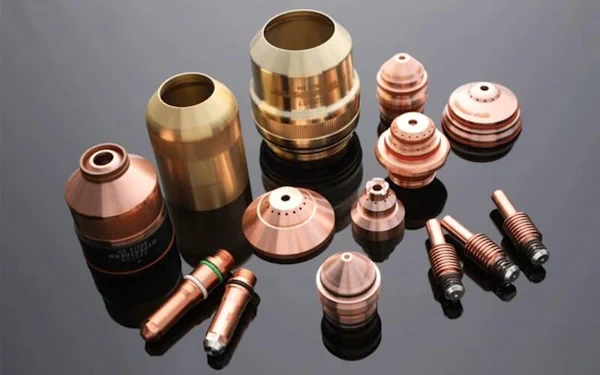
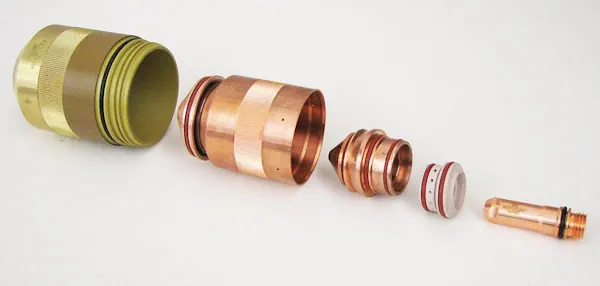
Assess the matched consumable set
Verify the electrode, nozzle and other torch components against the system cutting chart. Similar appearance or neighbouring part numbers do not prove equivalence. Use the manufacturer’s inspection and replacement limits. When a component needs replacement, assess the condition of the remaining consumables during the same inspection.
Connect maintenance records to purchasing
Only authorised personnel following the manufacturer’s safe shutdown and maintenance procedures should intervene on the machine. Record removed part numbers clearly. Include torch model, process and current code when ordering. For catalogue products without a technical table, request the missing information using the contact link instead of assuming a specification.
Ordering and inspection checklist
- Torch model and current consumable codes
- Material, programme and inspection date
- Pierce count or arc time if available
- Observed quality change and maintenance record
- Matched parts checked against the manufacturer chart